


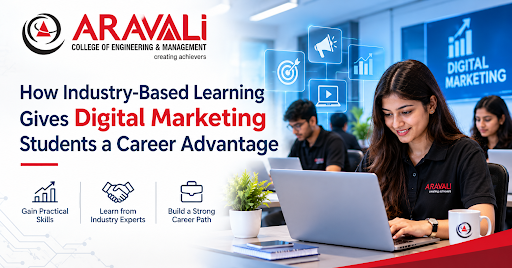
How Industry-Based Learning Gives Digital Marketing Students a Career Advantage
Digital marketing is a practical field where employers look for more than theoretical knowledge. Students need to understand how businesses attract customers, manage online campaigns, improve search visibility, and measure marketing performance. Classroom learning provides the foundation, but applying that knowledge to real situations helps students develop the skills required in professional roles. This is why industry-based education has become an important consideration when choosing a Digital Marketing College in Faridabad. At Aravali College of Engineering and Management (ACEM), students can explore the importance of connecting academic learning with industry requirements and preparing for changing career opportunities.
Industry-based learning focuses on practical exposure, problem-solving, and an understanding of how marketing activities work in actual business environments. Instead of limiting education to textbooks and classroom discussions, this approach encourages students to understand marketing challenges and explore suitable solutions. For students planning a career in digital marketing, this learning experience can make the transition from education to employment more manageable.
Why Practical Learning Matters at a Digital Marketing College in Faridabad
Some of the tasks associated with digital marketing include search engine optimisation, social media marketing, content generation, paid advertising, email marketing, and analysis of performance, among others. Different skills are needed in each discipline. Students may be able to get the basics through classes, but the application of these skills is through practice and knowledge of the digital environment. For instance, in learning SEO, one has to know keywords, website architecture, quality of content, and search engine guidelines. However, by working on a sample website, the students get to know how keyword research affects content strategy. In learning social media marketing, one gets to see the value of creating a content calendar.
Practical education can also help the learners realise that marketing actions are driven by the goals of the enterprise. The marketing campaign created to increase brand awareness will be quite different from the one created to create leads or increase sales. This knowledge can help the learners become more organized when engaging in marketing actions.
Understanding Real Business Challenges Through Industry Exposure
Some of the greatest strengths of industry-based learning include exposing students to the various issues that business organizations encounter while conducting themselves in the online space. Marketing campaigns may not necessarily yield the desired results. A site could be receiving traffic but no enquiries; there could be activity on social media with no customers coming through, or there could have been spending of budgets for ads with no good quality leads coming through. Students who are aware of such issues are able to cultivate problem-solving skills.
For example, a firm that faces low traffic on its website will have to optimize its keywords or even improve the quality of the content on its website. In addition, a company that attracts website visitors but few inquiries will have to improve its landing page content, navigation, or call-to-action placement. Through such examples in practice, students will be able to see the relationship between marketing practices and their outcomes.
Developing Job-Ready Skills at a Digital Marketing College in Faridabad
Employers generally expect digital marketing professionals to understand both marketing concepts and the tools used to implement them. Students who receive practical exposure during their education can become more familiar with the responsibilities associated with different job roles.
Some important skills developed through industry-based learning include:
- Search Engine Optimisation: Students learn the basics of keyword research, on-page optimisation, content planning, internal linking, and website performance. These skills help them understand how businesses improve their visibility in organic search results.
- Social Media Management: Working on social media assignments introduces students to content planning, platform selection, audience engagement, and campaign evaluation. They also learn that different platforms require different communication approaches.
- Content Marketing: Creating blogs, website content, captions, and promotional material helps students understand how useful content supports audience engagement and business objectives. It also improves their writing and communication abilities.
- Paid Advertising: Learning about paid campaigns helps students understand audience targeting, advertising budgets, ad creatives, and campaign objectives. Practical exercises can make these concepts easier to apply.
- Analytics and Reporting: Students become familiar with the importance of tracking website traffic, engagement, conversions, and campaign performance. Understanding data helps them make informed marketing decisions.
These skills provide a useful foundation for exploring roles such as SEO executive, digital marketing executive, social media executive, content marketer, and performance marketing assistant.
How Industry-Based Projects Improve Problem-Solving Abilities
Projects are an important part of practical education because they encourage students to apply their knowledge instead of simply memorising information. An industry-related project can involve planning a social media campaign, conducting keyword research for a website, preparing an SEO audit, or developing a content strategy for a sample business.
Such activities teach students how to approach a task from beginning to end. They need to understand the objective, research the subject, select suitable methods, complete the work, and review the outcome. This process develops independent thinking and helps students become more comfortable handling responsibilities.
Group projects also introduce students to collaboration. Digital marketing activities often involve coordination between content writers, designers, SEO professionals, advertising specialists, and business teams. Working with other students helps them understand the importance of sharing ideas, managing responsibilities, meeting deadlines, and accepting feedback.
Another benefit is learning how to improve work based on results. If a particular content approach does not meet the project objective, students can review their decisions and try a different method. This develops a practical mindset that is useful in professional environments.
Building Communication and Professional Skills for Marketing Careers
Technical knowledge is important, but digital marketing professionals also need strong communication and organisational abilities. They frequently work with clients, colleagues, managers, and other departments. Explaining ideas clearly, understanding requirements, and presenting campaign results are common workplace responsibilities.
Industry-based learning can help students develop these abilities through presentations, group discussions, assignments, and project reviews. When students explain their marketing strategies, they learn to organise information and communicate their decisions in a clear manner.
Time management is another important skill. Marketing professionals often handle multiple activities, such as preparing content, monitoring campaigns, updating reports, and coordinating with team members. Students who work on scheduled assignments become more familiar with planning tasks and completing them within deadlines.
Feedback also plays an important role in professional development. Reviewing suggestions from teachers, mentors, or project supervisors helps students identify areas where their work needs improvement. Accepting feedback and making necessary changes prepares them for the expectations of a professional workplace.
Choosing the Right Digital Marketing Education for Long-Term Growth
Selecting an educational institution requires more consideration than simply comparing course names or classroom facilities. Students should understand whether the learning environment supports practical skill development and helps them explore different areas of digital marketing.
When evaluating a Digital marketing College in Faridabad, students should consider the following aspects:
- Practical assignments: Check whether the learning approach includes projects that allow students to apply marketing concepts.
- Industry-relevant curriculum: Look for subjects covering SEO, social media, content marketing, paid advertising, and analytics.
- Exposure to digital tools: Understand whether students get opportunities to work with commonly used marketing platforms and tools.
- Communication development: Consider whether presentations, discussions, and collaborative activities are included in the learning process.
- Career guidance: Explore whether the institution provides guidance related to professional skills, career options, and interview preparation.
- Project-based learning: Look for opportunities to create sample campaigns, analyse websites, and solve marketing-related problems.
Students should also consider their own interests before selecting a career direction. Someone who enjoys writing may explore content marketing, while a student interested in numbers and campaign performance may prefer analytics or paid advertising. Understanding these preferences can help students make more informed learning and career decisions.
Preparing for the Changing Requirements of the Digital Marketing Industry
Digital marketing continues to develop as search platforms, advertising technologies, consumer preferences, and online communication methods change. Professionals must regularly update their knowledge to remain familiar with new practices and tools. Industry-based learning encourages students to develop this habit early. They learn that completing a course is only one stage of professional development. Reading industry updates, exploring new tools, analysing marketing campaigns, and practising different techniques are also important for long-term growth.
Students should develop curiosity and become comfortable experimenting with different approaches. For example, they can compare content formats, study how websites organise information, or examine why certain social media campaigns attract audience attention. These activities help them build an understanding of marketing beyond classroom lessons. A strong learning foundation also makes it easier to explore specialised areas in the future. Students may gradually develop expertise in technical SEO, e-commerce marketing, social media strategy, conversion optimisation, or performance advertising according to their interests and career goals.
Conclusion
Industry-based learning gives digital marketing students an opportunity to connect academic concepts with practical workplace requirements. It develops technical knowledge, communication abilities, problem-solving skills, and an understanding of how businesses use digital platforms to achieve their objectives. Practical projects and industry-related assignments also help students recognise their strengths and identify areas that require further development.
Choosing the right educational environment is an important step towards building a career in this field. (ACEM) can be considered by students exploring educational opportunities in Faridabad. By focusing on practical knowledge, continuous learning, and professional skill development, aspiring marketers can build a stronger foundation for exploring different career opportunities in digital marketing.
Frequently Asked Questions
1. What is industry-based learning in digital marketing?
Industry-based learning is a practical approach to education where students learn digital marketing through real-world projects, industry case studies, live campaigns, and hands-on activities rather than relying only on theoretical knowledge.
2. How does industry-based learning help digital marketing students become job-ready?
It helps students develop practical skills in SEO, social media marketing, Google Ads, content marketing, and analytics. Working on industry-related projects also improves their problem-solving, communication, and campaign management skills.
3. Why is practical experience important for a career in digital marketing?
Practical experience allows students to understand how digital marketing strategies work in real business situations. It helps them build confidence, understand industry tools, manage campaigns, and prepare for workplace responsibilities.
4. What skills can students develop through industry-based digital marketing training?
Students can develop skills such as keyword research, SEO optimisation, paid advertising, social media management, content creation, email marketing, data analysis, and performance reporting.
5. Can industry-based learning improve digital marketing placement opportunities?
Yes, industry-based learning can improve placement opportunities by helping students build practical experience, create a project portfolio, and understand employer expectations. These skills can make them better prepared for entry-level digital marketing roles.