


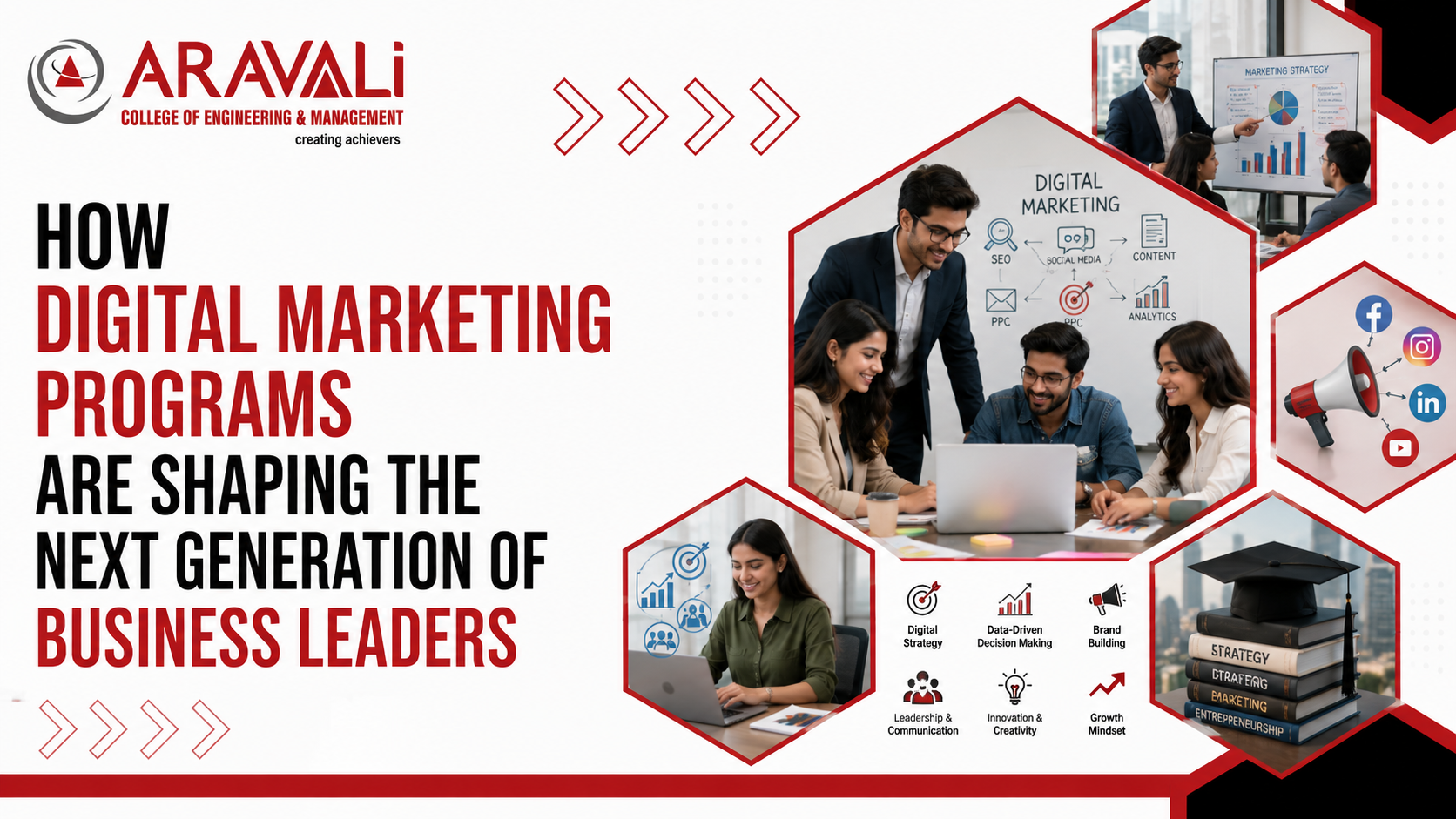
How Digital Marketing Programs Are Shaping the Next Generation of Business Leaders
The Digital Marketing Programs contribute to creating the next generation of leaders, as they include knowledge in marketing, technology, data analysis, and strategic decision-making. Modern companies use digital platforms extensively in their operations, such as reaching out to consumers, building brands, and developing overall. Thus, leaders of the future should possess knowledge of digital marketing instruments, consumer behavior online, digital business strategies, and making decisions based on data. Programs like these prepare individuals with useful competencies that go far beyond just marketing and make one a flexible leader in the digital world.
Key Takeaways
- Digital Marketing Programs offer marketing and leadership skills training.
- Students get educated in decision-making and business strategy.
- Digital marketing is useful in various industries.
- Practical education is beneficial for solving real-world business issues.
- Leadership skills require technology and analytics now.
- Digital marketing fosters innovation and business development.
- Employers are looking for digital marketing experts.
What You Should Know?
The business environment has undergone considerable change over the past decade. No longer do businesses use only the traditional methods of reaching out to potential consumers. Instead, they employ search engines, social media, content marketing, email marketing, and online advertising to reach their audiences.
With this change, it becomes imperative for contemporary business schools to include Digital Marketing Programs in their curriculum. Such programs prepare students for how digital platforms impact consumer and business behaviors.
More importantly, they prepare students for how marketing strategies affect the overall business strategy of companies. This kind of approach prepares them to build leadership skills that go beyond marketing activities.
Leaders with knowledge of digital environments are now in high demand as companies undergo the process of their digital transformation.
Important Factors
Several factors contribute to the growing importance of digital marketing education for future business leaders.
Technology Integration
Modern businesses depend on technology to improve efficiency and customer engagement.
Important technologies include:
- Search engine optimization (SEO)
- Social media platforms
- Marketing automation
- Artificial intelligence tools
- Data analytics software
Consumer Behavior Changes
Today’s consumers spend a significant amount of time online. Understanding digital customer journeys is essential for business success.
Data-Driven Decision Making
Leaders are expected to make informed decisions using real-time data and performance metrics.
Cross-Functional Business Knowledge
The best Digital Marketing Programs help students understand how marketing connects with sales, finance, operations, and customer service.
Benefits / Advantages
Digital marketing education offers numerous benefits for aspiring business leaders.
- Stronger Strategic Thinking- Students learn how marketing initiatives contribute to broader business objectives.
- Enhanced Analytical Skills- Modern marketing relies heavily on data analysis and performance measurement.
- Improved Leadership Capabilities –Students develop skills related to communication, decision-making, and team management.
- Greater Career Flexibility- Knowledge gained through Digital Marketing Programs is applicable across various industries and business functions.
- Better Understanding of Customers- Students learn how to identify customer needs, preferences, and purchasing behaviors.
- Increased Employability- Organizations actively seek professionals who understand both business management and digital technologies.
Why It Matters?
Digital transformation is affecting nearly every industry. Whether a company operates in retail, healthcare, finance, manufacturing, or education, digital channels play a significant role in customer engagement and business growth.
Leaders who understand digital marketing are better equipped to:
- Identify growth opportunities
- Analyze market trends
- Improve customer experiences
- Drive innovation
- Manage digital transformation initiatives
This is why Digital Marketing Programs have become valuable not only for marketing professionals but also for aspiring managers, entrepreneurs, and executives.
The ability to combine business strategy with digital expertise gives future leaders a competitive advantage in today’s rapidly evolving marketplace.
Organizations increasingly expect managers to understand digital channels, online consumer behavior, and technology-driven business models.
Common Mistakes to Avoid
Students often make mistakes when evaluating digital marketing education opportunities.
- Focusing Only on Social Media- Digital marketing extends far beyond social media platforms and includes multiple disciplines.
- Ignoring Data Analytics- Successful digital strategies depend heavily on data interpretation and performance measurement.
- Neglecting Practical Experience- Students should prioritize programs that offer hands-on projects and industry exposure.
- Overlooking Business Fundamentals- Marketing knowledge should be supported by a strong understanding of business principles.
- Following Trends Without Strategy- Digital tools are effective only when aligned with business goals and customer needs.
- Limiting Learning to One Platform- Future leaders should develop knowledge across multiple digital channels and technologies.
Expert Insights
Industry experts consistently emphasize the importance of digital literacy for future business leaders.
According to management professionals, successful leaders today need to understand:
- Customer acquisition strategies
- Online brand management
- Performance marketing
- Business analytics
- Artificial intelligence applications
- Digital transformation frameworks
The most effective Digital Marketing Programs combine theoretical concepts with practical implementation. Students benefit from working on live projects, case studies, and real-world business challenges.
Experts also recommend continuous learning because digital technologies and consumer behaviors evolve rapidly. Future leaders who stay updated with industry trends are more likely to succeed in competitive business environments.
Organizations increasingly reward professionals who can connect digital marketing efforts with measurable business outcomes.
Frequently Asked Questions
Why are digital marketing programs important for future business leaders?
They help students develop strategic, analytical, and technology-related skills that modern organizations value.
Can digital marketing skills help beyond marketing careers?
Yes. These skills support leadership roles in management, entrepreneurship, sales, business development, and operations.
Do digital marketing programs teach data analysis?
Most modern programs include analytics training to help students make data-driven decisions.
How do digital marketing programs improve employability?
They provide practical skills that align with current industry demands and digital business requirements.
Are digital marketing skills relevant in all industries?
Yes. Almost every industry uses digital channels to engage customers and support business growth.
What leadership skills can students gain through digital marketing education?
Students often develop communication, strategic thinking, problem-solving, decision-making, and project management skills.
Final Takeaway
Digital Marketing Programs are playing a critical role in preparing the next generation of business leaders. By combining marketing knowledge, technology expertise, analytical thinking, and strategic decision-making, these programs help students develop the skills needed to thrive in a digital-first economy. As organizations continue to embrace digital transformation, professionals with digital marketing expertise will remain highly valuable across industries. Aravali College of Engineering and Management recognizes these evolving industry needs and focuses on equipping students with practical knowledge, leadership capabilities, and future-ready skills that support long-term career success in the modern business world.