


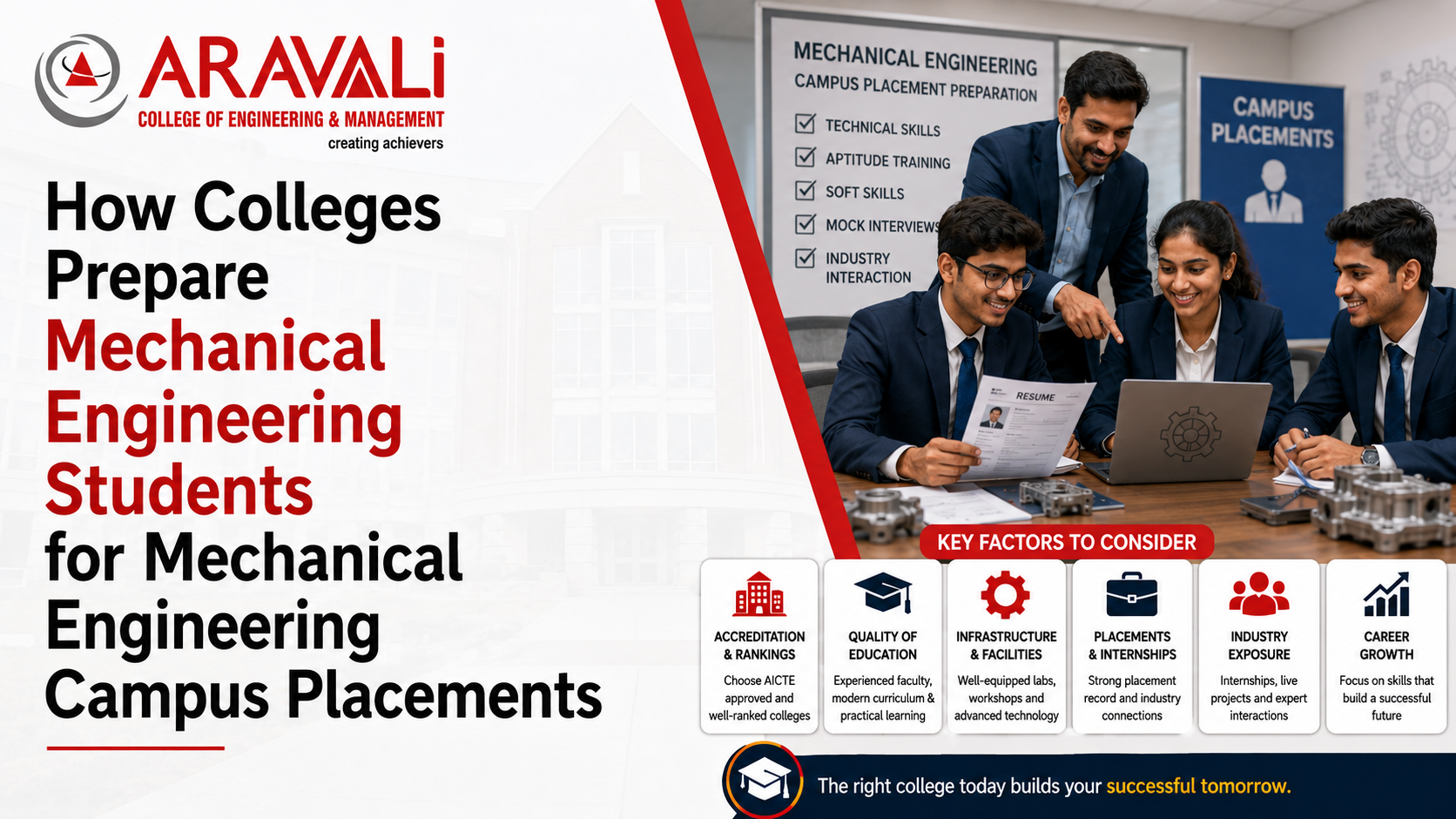
How Colleges Prepare Mechanical Engineering Students for Mechanical Engineering Campus Placements
Year after year, countless mechanical engineering students come to college with just one hope in mind: to get a good placement in an esteemed company. However, only a few really think they are well-prepared when the time comes for the placement drives.
The Reason is not Ability. The Reason is Preparation
Today, engineering colleges are not measured solely on their academic performance but by how well they prepare the students for Mechanical Engineering campus placements. With an emphasis on developing industry-ready engineers, the focus is now more on preparation than anything else.
All aspiring engineers need to know the role played by the college in this process.
How Modern Colleges Prepare Students for Recruitment Drives
The current colleges that offer engineering courses have a systematic procedure in preparing their students for recruitment drives. This process has gone beyond the final year to the earlier semesters.
Some colleges that prepare students for Mechanical Engineering placements may include:
- Foundation training in core mechanical subjects
- Coding and software exposure (CAD, CAM, MATLAB)
- Regular aptitude and reasoning practice sessions
- Industry-oriented workshops and seminars
The idea is to gradually build both technical strength and problem-solving ability, so students are confident during placement interviews.
Role of Practical Training and Industry Exposure
One of the biggest gaps between academics and industry expectations is practical exposure. Employers want graduates who understand real-world applications, not just theoretical concepts.
To bridge this gap, institutions strengthen Mechanical Engineering campus placements readiness through:
- Hands-on lab sessions with modern machinery
- Internship opportunities in manufacturing and automotive companies
- Live industrial projects and case studies
- Visits to factories and production units
These experiences help students understand how engineering principles are applied in real environments, improving both technical confidence and adaptability.
Skill Development That Directly Impacts Placement Success
Beyond technical knowledge, companies hire based on overall personality, communication, and problem-solving abilities.
Colleges focusing on Mechanical Engineering campus placements invest heavily in skill development areas such as:
- Aptitude and logical reasoning training
- Communication and presentation skills
- Group discussion practice sessions
- Resume writing and interview preparation
- Soft skills and corporate etiquette training
Key advantage:
Students become not just engineers but professionals capable of working in team-based, high-pressure environments.
How Placement Cells and Industry Connections Work
Placement cells act as the bridge between students and companies. Their role is critical in ensuring students get access to the right opportunities.
Strong institutions enhance Mechanical Engineering campus placements by:
- Building partnerships with core engineering companies
- Organizing campus recruitment drives
- Inviting industry experts for mock interviews
- Providing career counseling and mentorship
- Tracking student progress individually
Companies today look for candidates who are job-ready from day one, and placement cells ensure that expectation is met through structured preparation.
What Students Should Do to Improve Their Placement Chances?
Even with strong institutional support, student effort plays a major role in placement success.
To maximize opportunities in Mechanical Engineering campus placements, students should:
- Strengthen core mechanical engineering concepts
- Learn industry software tools (AutoCAD, SolidWorks, CATIA)
- Practice aptitude tests regularly
- Participate in internships and projects
- Improve communication and confidence
Consistency matters more than last-minute preparation. Students who actively engage throughout their course tend to perform significantly better in recruitment processes.
Final Thoughts
Successful Mechanical Engineering campus placements are the result of a combination of structured college support and student effort. Institutions today are focusing on industry exposure, technical training, and personality development to ensure graduates are job-ready.
Colleges like Aravali College of Engineering and Management emphasize practical learning, skill development, and industry collaboration to prepare students for real-world engineering careers. For students aiming to build a strong foundation in mechanical engineering, choosing the right institution can make all the difference in long-term career success.